

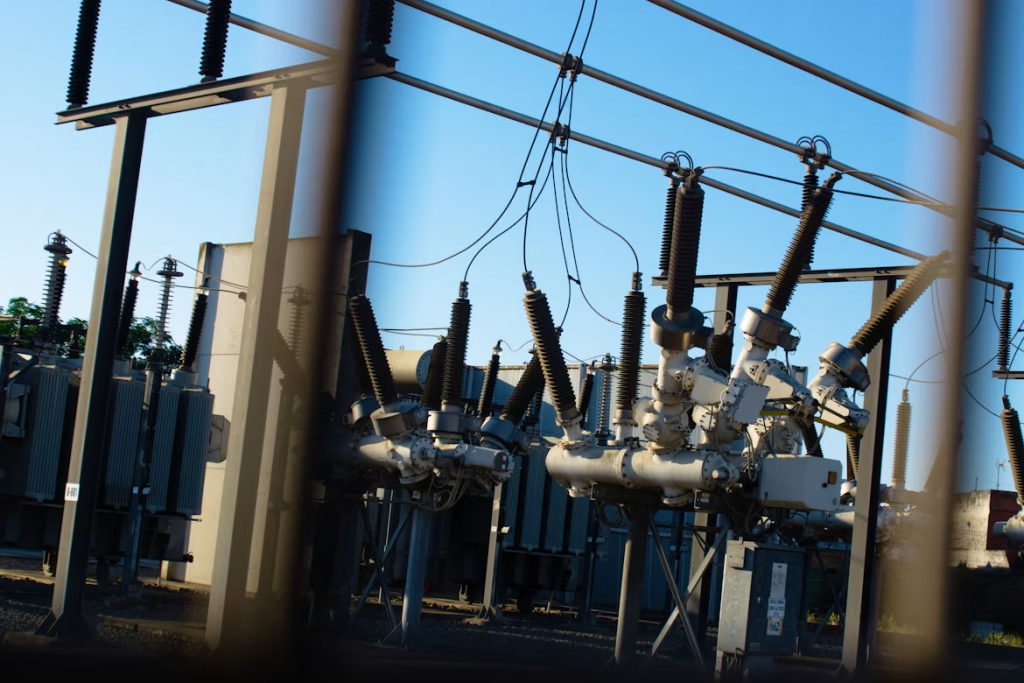
An increase in demand for energy is taking its toll, this study’s modelling toolkit can be one step towards planning upgrades for electricity networks
Europe’s electricity grids could struggle to keep the lights on during future heatwaves, with research warning that rising temperatures may trigger power shortages, even in more developed countries.
A study published in Nature Energy last month modelled how heat affects electricity networks across eight European countries. They found that France, Spain and Italy face the greatest risk of energy supply bottlenecks and power cuts, while the UK and Germany remain more resilient for now.
“Once you combine all the factors together: demand increase, generator capacity decrease, and transmission capacity decrease, you can discover hidden bottleneck regions that existing methods can’t find,” said lead author Professor Enming Liang, from City University of Hong Kong.
Heatwaves put pressure on electricity systems from several directions and as temperatures rise, there is more demand for air conditioning. Meanwhile, power stations may have to reduce output to avoid overheating, solar panels become less efficient and low winds can reduce wind power generation. Overhead power lines also carry less electricity safely as they heat up, increasing the risk of failures.
To capture these connected effects, the international team working on this study developed an open-source modelling toolkit, HEAT-Analysis, which uses simulations based on heatwaves that occurred in 2019, 2022 and 2024 to test how European grids might cope with projected conditions between 2026 and 2030.
The researchers hope grid operators will use the toolkit to identify weak points and plan upgrades, including expanding energy storage and strengthening transmission lines. Relying on neighbouring countries for backup electricity may not work if several grids are under stress simultaneously.
We may be moving into winter now, but global warming is not slowing down. As heatwaves are expected to intensify, preparing power networks for summer extremes may become just as important as planning for winter peaks.
By Victoria Raunio, November 18th, 2026.
Edited by Tara Sharif
Subedited by Rhea Basra and Emily Crichton


More Stories
Cities Change Animal Anatomy
MRI scans reveal how the placenta contracts during pregnancy
Trump wants to send US citizens exposed to Ebola to Kenya